
Selecting the right firearm optic is one of the most effective upgrades you can make for accuracy, speed, and consistency. With today’s wide range of red dot sights, holographic sights, LPVOs, and traditional scopes, understanding the strengths of each system helps you choose the optic that best supports your shooting style. This guide explains the major types of optics and highlights trusted, duty-ready brands known for performance.
Red Dots: Fast Target Acquisition for Close Quarters
Red dot sights are among the most popular firearm optics for defensive shooting, competitions, and general-purpose use. These 1× (non-magnified) optics project an illuminated dot or reticle that makes fast, repeatable target acquisition straightforward.
Red dots work well on pistols, shotguns, and rifles at close to mid-range distances. Keeping both eyes open allows for faster transitions, a wider field of view, and easier tracking of moving targets.
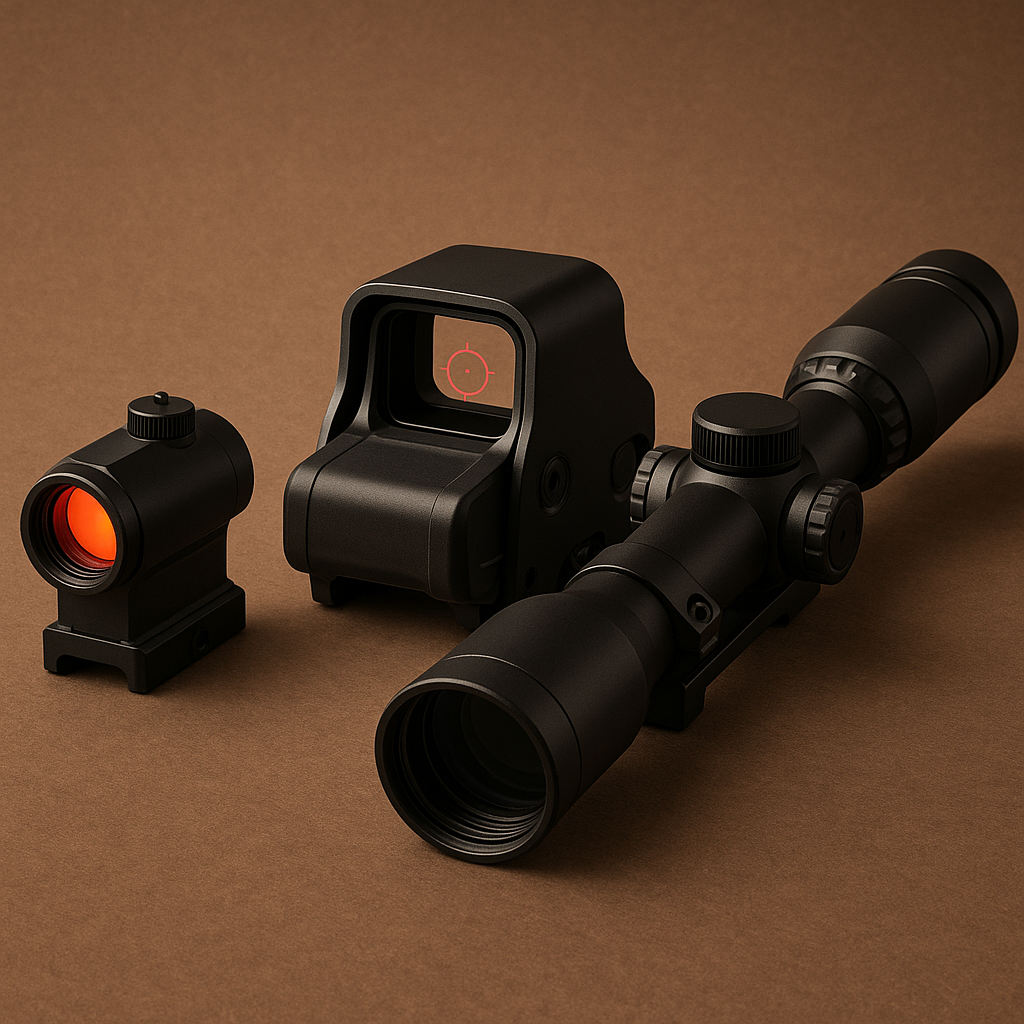
Examples include the Trijicon MRO, Holosun HS510C, Sig Sauer Romeo series, and EOTech’s 1× holographic-style sights. Many modern red dots offer long battery life, solar-assisted power, and rugged housings. If you want a lightweight sight that stays ready at all times, a red dot remains a reliable and versatile choice.
Holographic Sights: Advanced CQB Optics
Holographic sights project a laser-reflected hologram inside the viewing window. Like red dots, they are designed for close-quarters shooting, but they offer additional benefits. The reticle remains crisp under magnification and often appears cleaner for shooters with astigmatism.
A major advantage is that the reticle size stays consistent when paired with a magnifier. An EOTech’s 1 MOA dot remains 1 MOA even at higher magnification levels, making these optics more effective when stretching out to 200–300 yards.
Holographic sights come with trade-offs such as shorter battery life, slightly more weight, and higher cost. Models like the EOTech EXPS3 offer proven durability and night-vision compatibility. If you plan to run a magnifier or want a crisp, fast-acquisition reticle, a holographic sight is a strong option.
Magnified Rifle Scopes: Precision at Distance
For medium- to long-range shooting, a magnified rifle scope offers clarity and precision beyond what 1× optics provide. Scopes in ranges like 3–9× or 4–16× help shooters identify targets and make accurate shots at distances where red dots and holographic sights are less practical.
Brands such as Steiner and Athlon deliver high-quality glass, dependable tracking, and reticle options suited for hunting and precision roles. If you regularly engage targets past 300 yards or are setting up a long-range rifle, a magnified scope is ideal.
LPVOs: A Versatile All-Purpose Option
Low-Power Variable Optics (LPVOs) bridge the gap between close-range speed and long-range capability. With true 1× on the low end and magnification that typically reaches 4×, 6×, 8×, or higher, LPVOs offer flexibility for shooters who want one optic for varied use cases.
Options like the Sig Sauer Tango series allow shooters to move quickly at 1× and zoom in for more precise engagements. LPVOs add weight and require practice to master eye relief and adjustment, but they remain one of the most versatile choices for AR-platform rifles.
Specialized Optics: Thermal, Night Vision, and More
Thermal and night-vision optics expand visibility capabilities beyond traditional day optics. Brands like AGM Global Vision and ATN Corp produce thermal scopes that detect heat signatures through darkness, smoke, or thick brush, making them popular for hog hunting and surveillance.
Night-vision clip-ons and scopes amplify ambient light to allow target identification in near-total darkness. These systems require a larger budget and more training, but they offer significant advantages when operating after dark. For most shooters, a bright weapon light and an optic with night-vision-compatible settings provide a strong foundation.
Key Factors to Consider When Choosing an Optic
Purpose and Engagement Range: Match your optic to how you shoot. Close-quarters defense, competition, and long-range precision each benefit from different sighting systems.
Durability and Construction: Optics must withstand recoil, weather, and physical impact. Brands like Trijicon, EOTech, Holosun, Sig Sauer, and Steiner have strong reputations for durability.
Reticle Clarity and Glass Quality: Choose a reticle that supports your shooting style. High-quality glass improves visibility, especially in low-light environments.
Battery Life and Power Features: Red dots typically offer long runtimes. Holographic sights and illuminated scopes require more frequent battery changes. Features like shake-awake or solar backup extend operational life.
Mounting Hardware: A reliable mount is essential for holding zero. Quality mounts from Warne, Geissele Automatics, Reptilia, and similar brands ensure stability and repeatability.
Final Thoughts
No single optic is perfect for every situation. Red dots and holographic sights excel inside 100 yards, while LPVOs and magnified scopes provide reach for targets past 300 yards. Many experienced shooters combine systems, such as pairing a magnified optic with an offset micro red dot or using a holographic sight with a flip-to-side magnifier.
Choosing a dependable optic from a reputable brand ensures better performance, greater confidence, and reliability when it matters most. By investing in the right sighting system, you improve speed, accuracy, and overall capability with your firearm.

Leave a Reply